TL;DR: Voltage determines how fast your e-bike can go; current determines how much force it can deliver. Together, they define power — and understanding both will help you choose the right system, troubleshoot problems, and get the most out of your drivetrain.
Introduction
If you’ve spent any time shopping for an e-bike or reading about motor controllers, you’ve probably seen specs like “48V / 20A” or “72V 3000W.” But what do those numbers actually mean for how your bike performs on the road — or on a steep hill?
Voltage and current are the two fundamental electrical quantities that govern everything in your e-bike’s powertrain: from the battery pack to the motor controller to the hub motor or mid-drive unit. Getting an intuitive feel for both will make you a smarter buyer, a better builder, and a more effective troubleshooter.
Let’s break it down.
The Water Pipe Analogy (And Why It Actually Works)
Electricity is invisible, which makes it hard to reason about intuitively. A classic and genuinely useful analogy is a water pipe system:
- Voltage is like water pressure — it’s the force pushing electrical charge through the circuit. Higher voltage means more “push.”
- Current is like flow rate — it’s how much charge (measured in amperes, or amps) actually moves through the wire per second.
- Power (watts) is the product of both:
P = V × I. More pressure and more flow = more energy delivered per second.
This analogy holds up surprisingly well for e-bikes. A high-voltage system can deliver a lot of power even at moderate current levels, while a low-voltage system needs very high current to achieve the same wattage — which comes with its own trade-offs.
What Voltage Means for Your E-Bike
Voltage is the electrical potential difference between the positive and negative terminals of your battery. Common e-bike voltages are 36V, 48V, 52V, 60V, and 72V, with higher voltages typically found on performance or cargo systems.
Voltage Affects Motor Speed (RPM)
For most brushless DC hub motors, the no-load RPM scales almost linearly with voltage. This is captured in the motor’s Kv rating (RPM per volt). A motor with a Kv of 10 RPM/V will spin at:
- 480 RPM at 48V
- 720 RPM at 72V
Since the wheel’s speed depends on motor RPM (for direct-drive hubs), higher voltage directly translates to higher top speed — assuming the controller allows it.
Voltage Affects System Efficiency
Higher voltage systems are more efficient at delivering the same power because they require less current. Lower current means less resistive heating in the wires, controller MOSFETs, and motor windings — which means less energy wasted as heat and more of it turning your wheel.
This is why high-performance cargo e-bikes and speed pedelecs increasingly run at 60V or 72V rather than the consumer-standard 36V or 48V.
Battery Voltage Sags Under Load
One often-overlooked point: your battery’s voltage is not fixed. A “48V” lithium battery is actually ~54.6V when fully charged and may drop to ~42V when nearly depleted. Under heavy load (climbing a hill, accelerating hard), voltage will temporarily sag further. Motor controllers must be designed to handle this range, and riders will notice reduced performance as the pack drains.
What Current Means for Your E-Bike
Current — measured in amperes (amps, A) — is the quantity of electrical charge flowing through the circuit per unit time. In an e-bike system, current is what produces torque.
Current = Torque
In a brushless DC motor, torque is proportional to current through the windings. This relationship is captured by the motor’s Kt (torque constant). If you want your e-bike to:
- Pull a heavy cargo load
- Climb a steep grade
- Accelerate quickly from a stop
…then you need high current delivery. This is why a controller’s peak current rating (often 30A, 50A, even 100A for high-performance systems) matters so much for real-world feel.
The Controller Limits Current
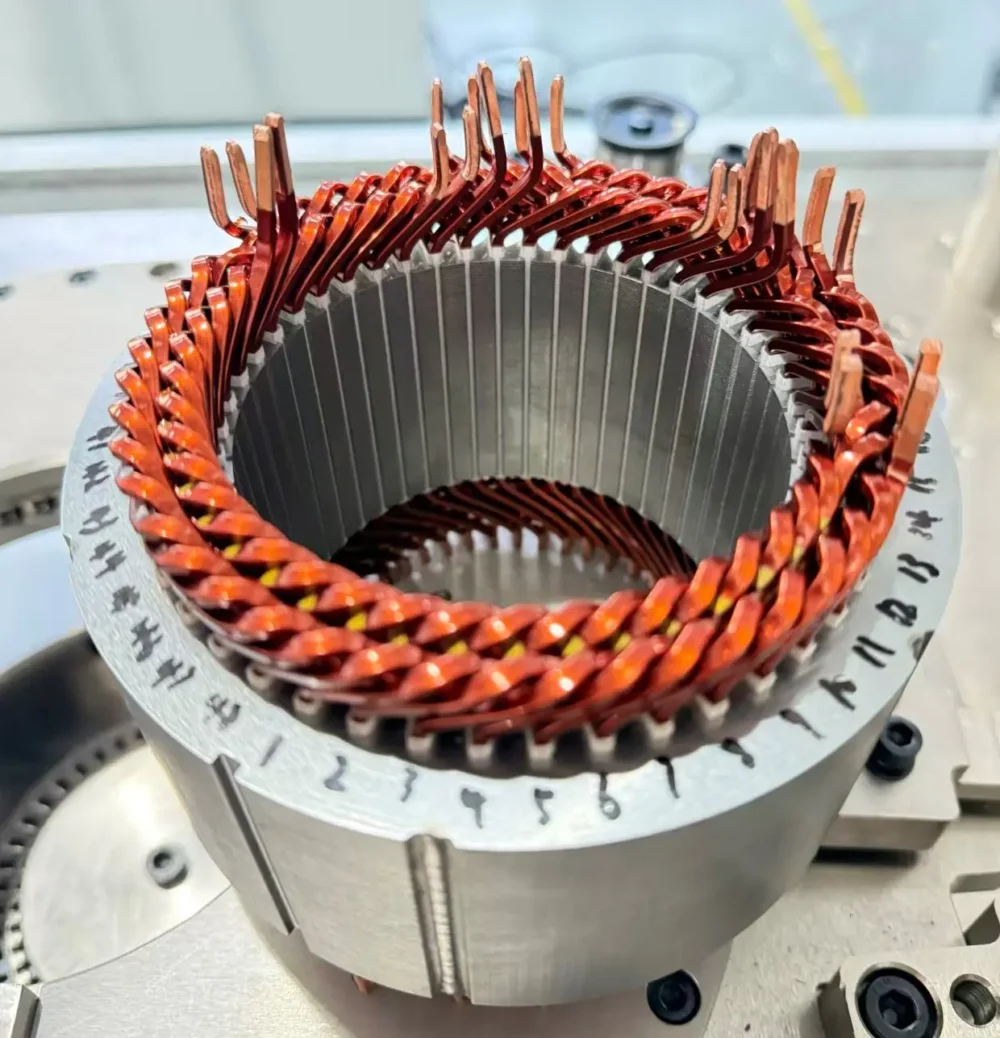
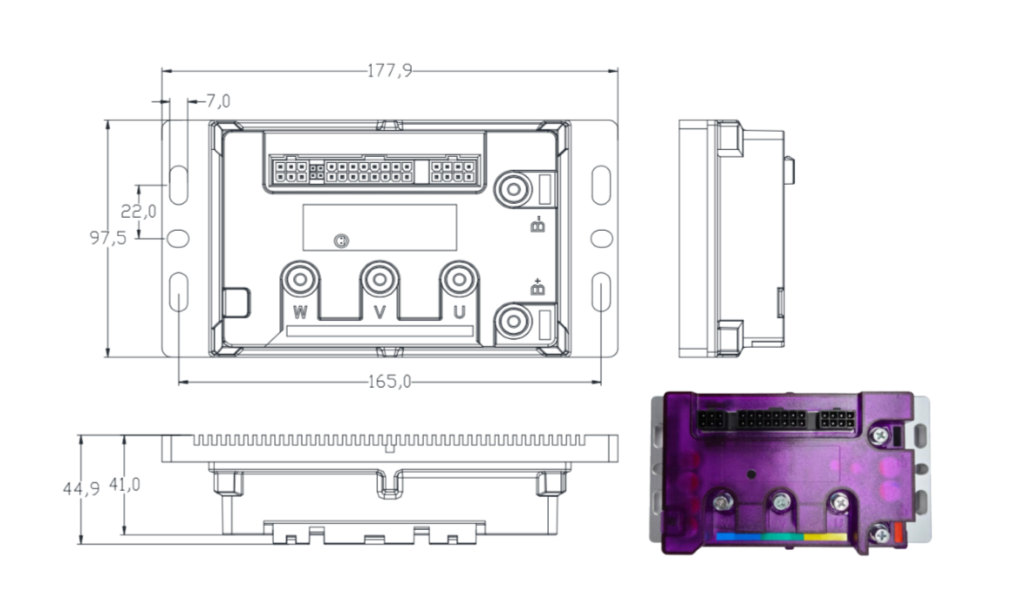
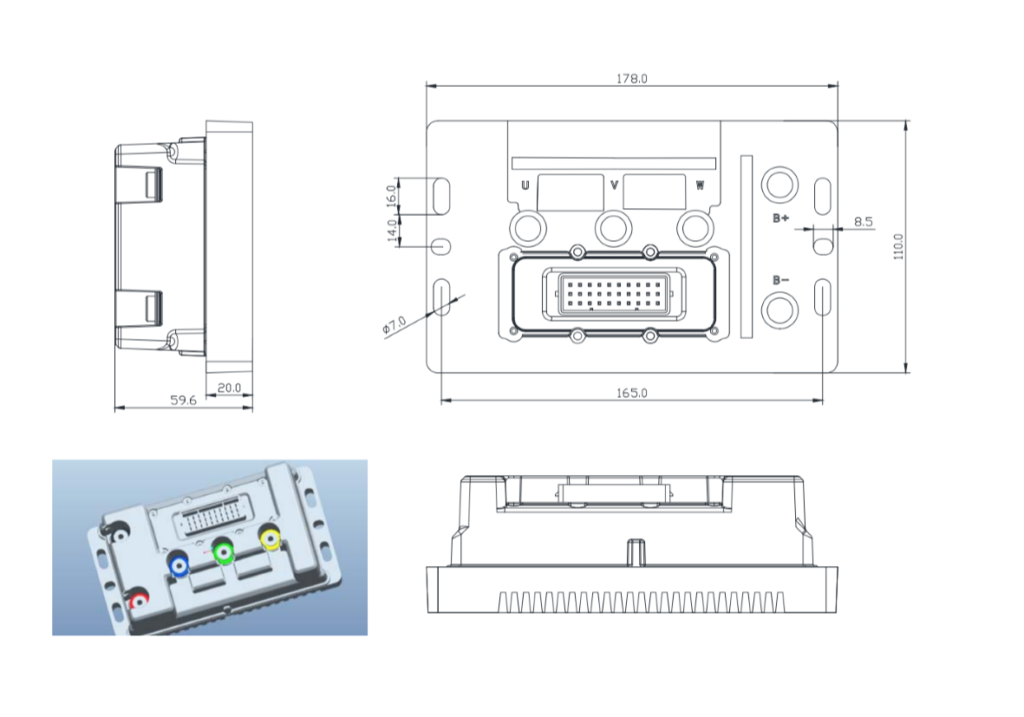
The motor controller is essentially a programmable current regulator. It takes your throttle input (or torque sensor signal) and adjusts how much current flows into the motor phases. Most controllers allow you to set:
- Maximum phase current — limits peak torque
- Battery current limit — limits draw from the pack (protects battery)
- Low-speed current boost — improves hill-climbing and startup feel
Tuning these parameters is one of the most impactful ways to change how a drivetrain feels.
Too Much Current = Heat and Failure
Current is also the primary driver of heat generation in wires and motor windings (via I²R losses — heat scales with the square of current). Running a motor or controller beyond its rated current for extended periods leads to insulation breakdown, demagnetization of the rotor magnets, and eventual failure. This is why thermal management — proper wire sizing, heatsinking, and duty cycle limits — matters so much in drivetrain design.
Power: Putting Voltage and Current Together
Power in watts tells you the rate of energy transfer — and it’s simply:
P (watts) = V (volts) × I (amps)
| System | Voltage | Current | Power |
|---|---|---|---|
| Entry-level commuter | 36V | 15A | 540W |
| Mid-range e-bike | 48V | 25A | 1,200W |
| Performance cargo | 72V | 45A | 3,240W |
| High-performance build | 72V | 80A | 5,760W |
Same wattage can be achieved in different ways, but as the table illustrates, pushing power up by raising voltage is thermally and electrically more forgiving than pushing it up by raising current.
Practical Takeaways for E-Bike Selection and Design
Understanding voltage and current gives you real decision-making power:
When choosing a battery: Higher voltage = higher potential speed and efficiency. Make sure your battery’s continuous discharge current rating (often expressed in amps or as a “C-rate”) matches or exceeds your controller’s peak demand.
When choosing a controller: Look at both the voltage range it supports and its continuous and peak current ratings. A 72V/50A controller delivers very different performance than a 48V/25A one, even if the watt ratings sound similar.
When diagnosing problems:
- Motor feels weak but speed is fine → likely a current (torque) issue: controller current limit too low, or motor phase wires undersized
- Top speed is low but torque feels fine → likely a voltage issue: battery sag, low state of charge, or voltage-limited controller
- System overheating → current too high for sustained use; check wire gauge, motor thermal rating, and controller heat dissipation
Conclusion
Voltage and current aren’t just numbers on a spec sheet — they’re the levers that define every aspect of your e-bike’s character. Voltage sets the ceiling on speed and governs system efficiency. Current is the engine of torque, acceleration, and hill-climbing capability. Together, they determine power, and how that power is managed — through the controller, the battery chemistry, and the motor design — is what separates a mediocre drivetrain from a great one.
Whether you’re spec’ing a new build, evaluating a supplier’s motor controller, or troubleshooting a system in the field, coming back to these two fundamentals will almost always point you in the right direction.
Have questions about motor selection, controller tuning, or drivetrain architecture? Feel free to reach out — this is exactly the kind of engineering challenge we work on every day.